Academic
Academic & Student Management
Everything needed to manage the student and academic lifecycle.
- Admissions & Enrollment
- Student Information
- Academic Planning
- Attendance
- Timetable
- Homework & Assignments
- Examination & Grading
- Report Cards
Manage your school's admissions, student records, academics, finance, HR, transport, communication and administration from one connected school ERP platform.
Padhalo helps schools move from spreadsheets, paper-based processes and disconnected software to a centralized system where teams can manage everyday operations with greater visibility and less manual work.
A school doesn't run through one department. Admissions, academics, finance, HR, transport and communication all depend on the same student, staff and operational information.
Padhalo School ERP connects these functions through one centralized platform, helping administrators and school leaders work with connected information instead of managing multiple disconnected systems.
Manage applications, enrollment and student onboarding.
Connect academic planning, timetables, assignments and examinations.
Manage fees, collections, expenses, payroll and financial information.
Manage staff, students, branches, resources and daily school operations.
Keep parents, teachers, students and administrators connected.
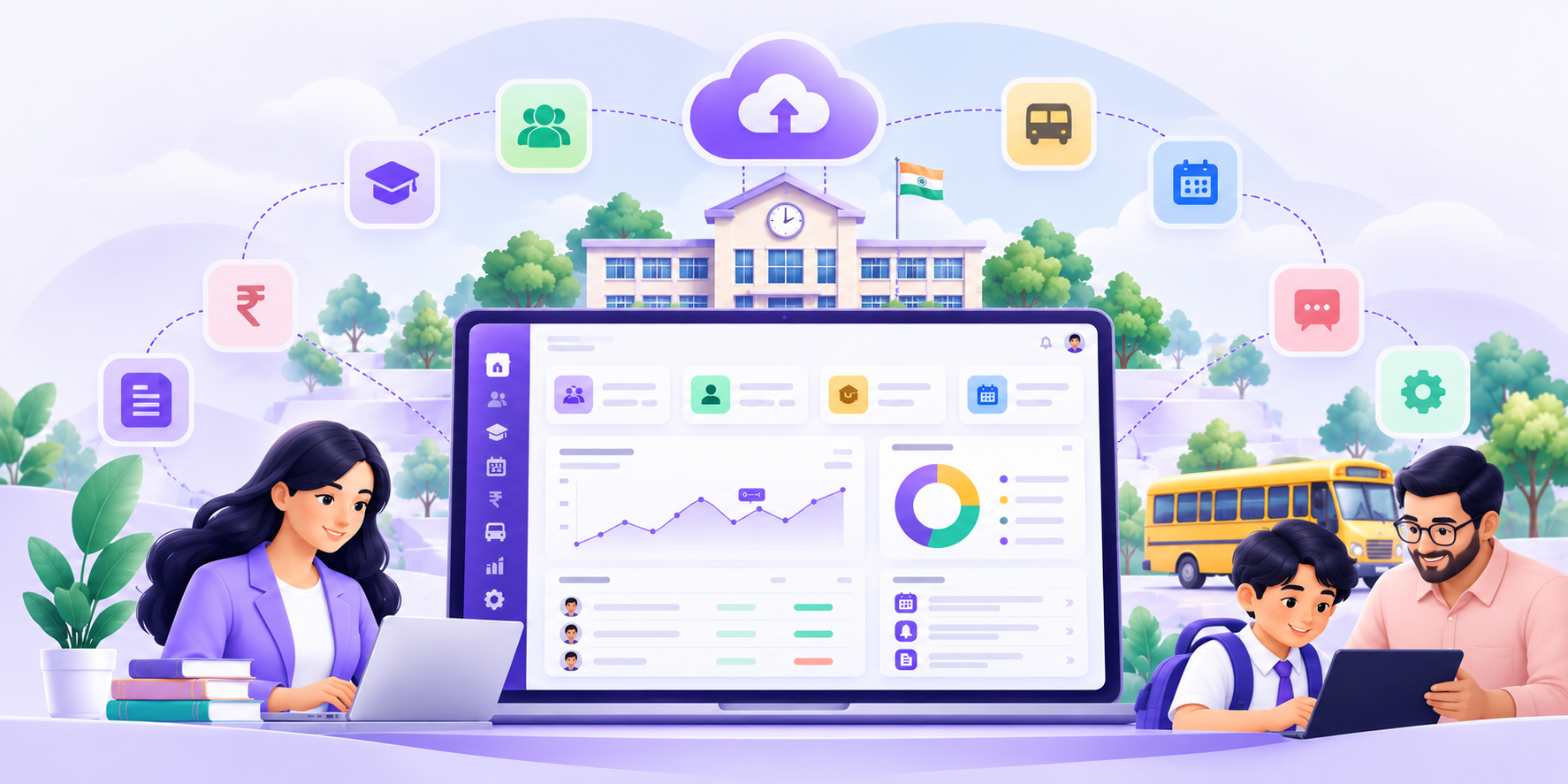 AdmissionStudent RecordAttendanceFeesAcademicsExaminationCommunicationReports
School ERP software is an integrated system that connects the different departments and operational processes of a school.
Instead of maintaining separate systems for admissions, student information, attendance, fees, examinations, HR, transport and communication, a school ERP brings these workflows into one connected environment.
For example:
The benefit of an ERP is not simply having many features. The real value comes from connecting the information and workflows between departments.
This gives school administrators a centralized view of operations while allowing teachers, finance teams, HR staff and other users to access the functions relevant to their roles.
As schools grow, managing operations through spreadsheets, registers and separate applications becomes increasingly difficult.
Teams may have to enter the same information multiple times, prepare reports manually or move information from one system to another.
A connected ERP can help schools reduce these operational gaps.
A school ERP can help schools achieve:
Automate and simplify repetitive administrative processes.
Keep important student, staff and operational information within one ecosystem.
Give school management access to centralized information and reports.
Reduce time spent moving data between departments.
Support growing student numbers, departments and school branches.
Keep parents, teachers and school teams connected through digital channels.
Schools in India manage academic, administrative, financial and operational workflows across different teams and, in many cases, multiple campuses. A school ERP can bring these processes together through one centralized platform.
Padhalo School ERP supports connected workflows for student management, academics, attendance, fees, finance, HR, transport, communication and reporting, helping schools manage day-to-day operations through a common digital system.
When evaluating an ERP, schools should consider their academic requirements, number of students, campuses, integrations, reporting needs, mobile access and implementation requirements.
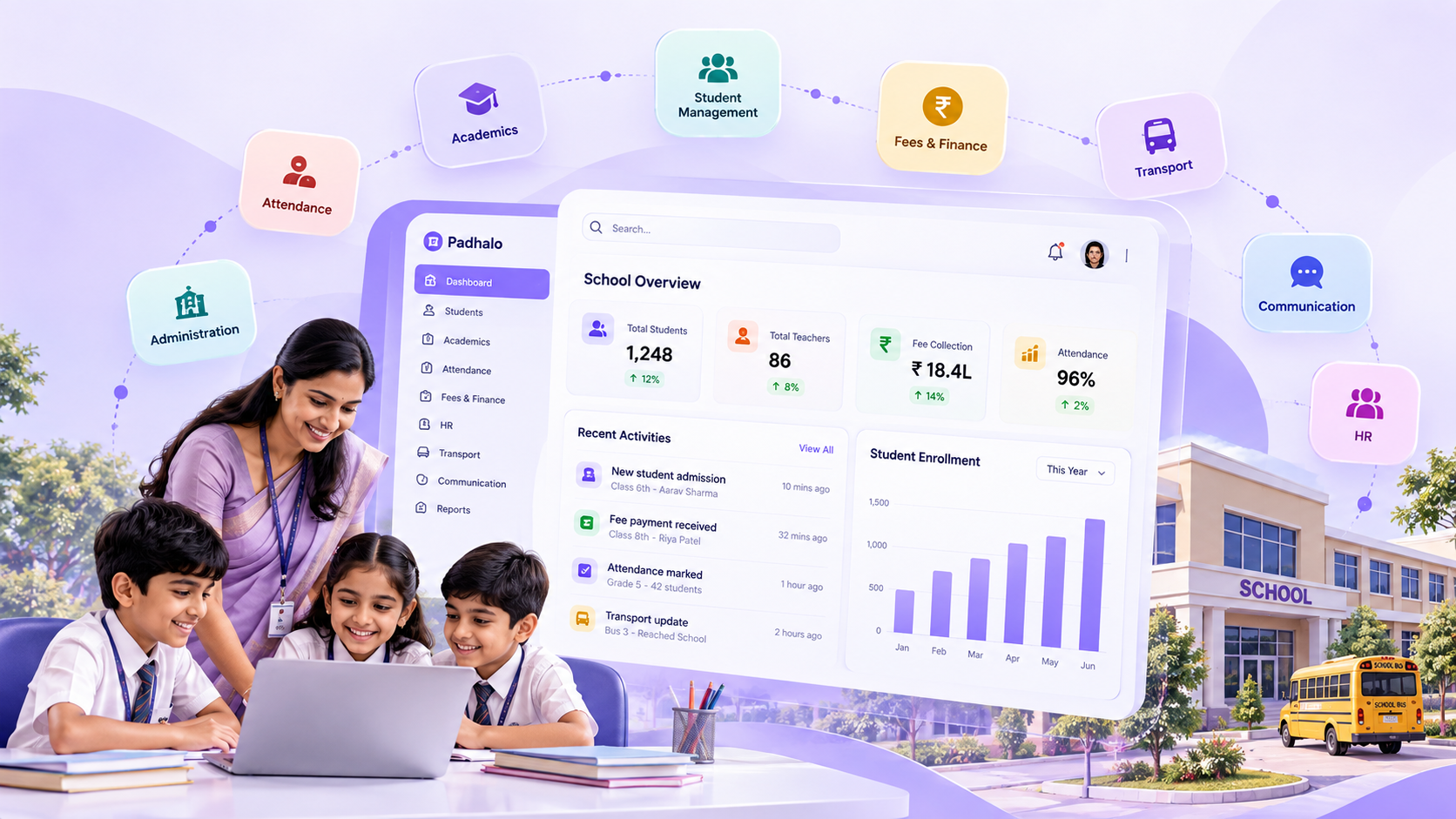
Padhalo brings the core functions of school administration together through a broad ERP ecosystem. The current platform includes 40+ ERP modules covering academic, financial, HR, operational and management requirements.
Padhalo School ERP brings these capabilities together across five core areas.
Everything needed to manage the student and academic lifecycle.
Manage financial and administrative workflows from one connected system.
Manage the operational systems that support your school every day.
Keep the school community informed and connected.
Give school leaders a centralized view of important operations.
The biggest advantage of an integrated ERP is how different processes work together.
Capture applicant information and complete the enrollment process.
The student's information becomes part of a centralized record.
Attendance, academics and other school activities are managed with student information.
Fees, payments and relevant financial records remain connected to the student and school.
Assessments, marks, grades and report-card information are managed through connected workflows.
Relevant updates can be shared with parents, students and staff.
School management can access reports and operational information through a centralized system.
School management needs more than individual reports from individual departments.
Padhalo provides centralized access to important operational information so administrators and school leaders can understand what is happening across the institution.
Depending on the user's role, management teams can monitor areas such as:
Padhalo's current ERP offering also includes a management app designed to provide access to operational information such as fee collection statistics, attendance and broadcast messages.
Management Dashboard
Modern school administration is not limited to one office computer.
A cloud-based school ERP allows authorized users to access relevant information from supported devices and locations while keeping school operations connected through a centralized platform.
Padhalo positions its School ERP as a cloud platform with centralized management, automated backups and cloud-based access.
Keep school information available to authorized users.
School leaders can stay connected even when they are away from campus.
Manage information across multiple school locations.
Reduce dependency on individual local installations.
Connect supported hardware and services with your ERP.
Adopting a school ERP does not necessarily mean replacing every technology system already used by your school.
Padhalo's current platform supports integrations with school infrastructure including biometric attendance machines, Tally accounting software, GPS trackers and payment gateways.
The result is a more connected technology ecosystem with less repetitive data entry.
Bring supported attendance data into your school ERP.
Connect supported RFID-based school workflows.
Connect school transportation and location data.
Support digital fee collection and payment workflows.
Connect supported accounting workflows with school operations.
As a school grows, managing every branch independently can make reporting and administration more difficult.
Padhalo supports multi-branch school management, allowing school groups to maintain centralized visibility while individual campuses continue managing their day-to-day operations.
Monitor important information across branches.
Give users access according to their responsibilities.
Bring relevant branch information together for management.
Create a technology foundation that can support future growth.
Padhalo is designed around the different people who keep a school running.
Get centralized visibility into important academic, financial and operational information.
Manage everyday school workflows while reducing repetitive data entry.
Access the student and academic information required for classroom activities.
Manage financial and staff-related processes through connected workflows.
Stay connected with relevant school information through digital experiences.
A school ERP manages important information such as student records, staff information, financial data and institutional records.
That makes controlled access an important part of any school technology platform.
Padhalo's current ERP page highlights encryption, automated backups and role-based access as part of its platform architecture.
Give users access to the information and functions relevant to their responsibilities.
Apply appropriate security controls to important school information.
Maintain backup processes to reduce risks associated with data loss.
Keep permissions structured across users, departments and branches.
Every school has different requirements.
Before selecting a school ERP, evaluate how well the platform fits your actual workflows.
Does it cover the operations your school actually needs?
Can it work with your existing attendance, GPS, payment and accounting infrastructure?
Can teachers and administrative staff use it comfortably every day?
Can the platform support future student growth and additional branches?
What support is available for migration, onboarding, training and integrations?
Consider software, implementation, integrations, support and other applicable costs.
Implementing an ERP does not have to mean changing every school process at the same time.
A phased approach can make adoption easier.
Phase 1
Set up student records and core school administration.
Phase 2
Enable attendance tracking and streamline communication.
Phase 3
Configure finance modules and fee management.
Phase 4
Set up academic structure and examination processes.
Phase 5
Manage transport, other school operations and reporting.
Padhalo's existing digital-transformation content also discusses a phased approach to moving schools from manual workflows toward cloud software and mobile engagement.
A Connected Foundation for Modern School Operations
Padhalo brings students, finance, staff, operations and management together through one connected school ERP platform. With 40+ ERP modules, cloud-based access, multi-branch capabilities and supported integrations, schools can manage their core workflows through a centralized system.
Practical guides and research to help school leaders make better decisions.
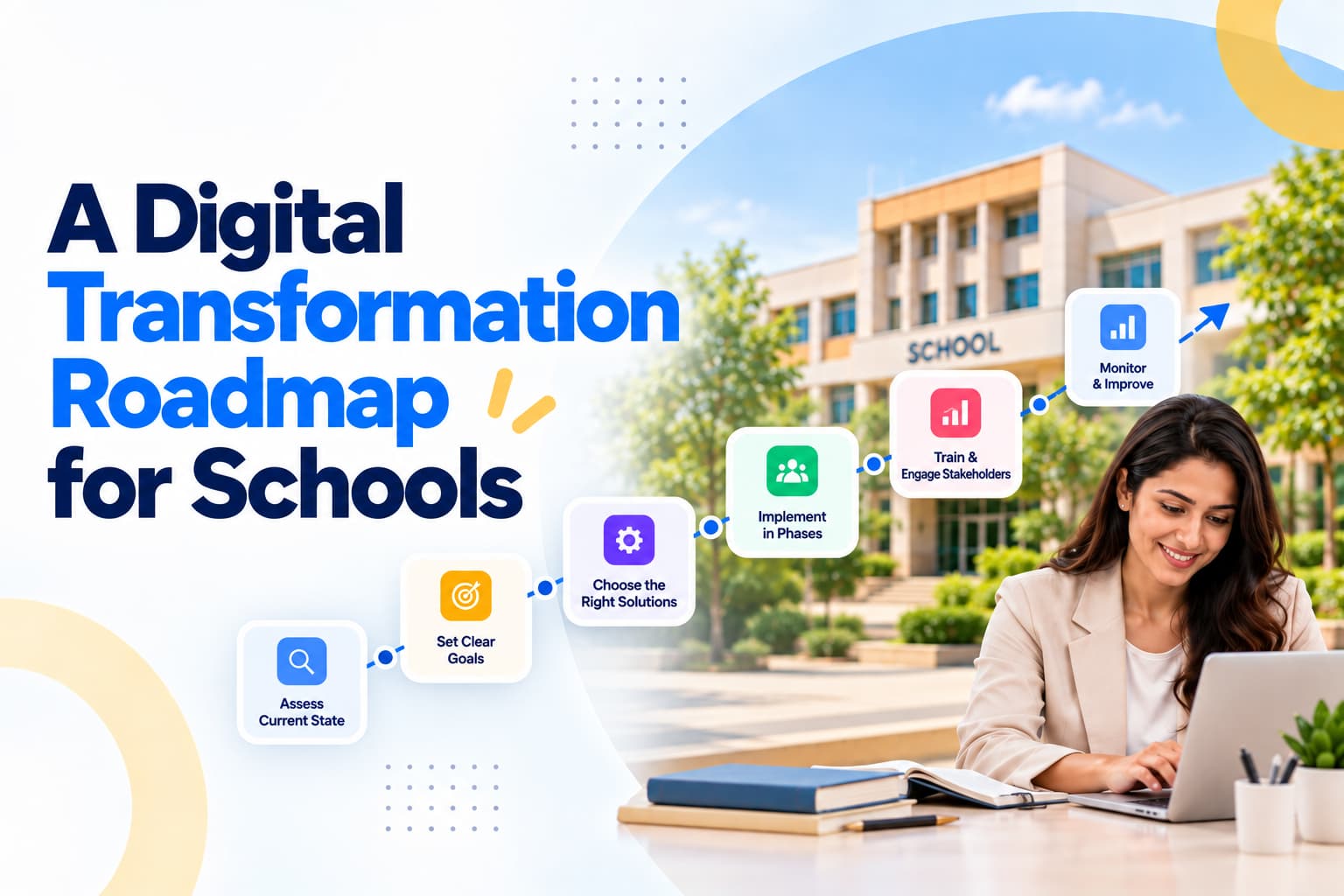 Digital Transformation
2026-05-08 10 min read
A phased approach for replacing manual school workflows with secure cloud software and mobile engagement.
 School Management
2026-01-12 8 min read
Learn what school leaders should expect from a modern school management platform, including mobile apps, automation, analytics, and secure cloud operations.
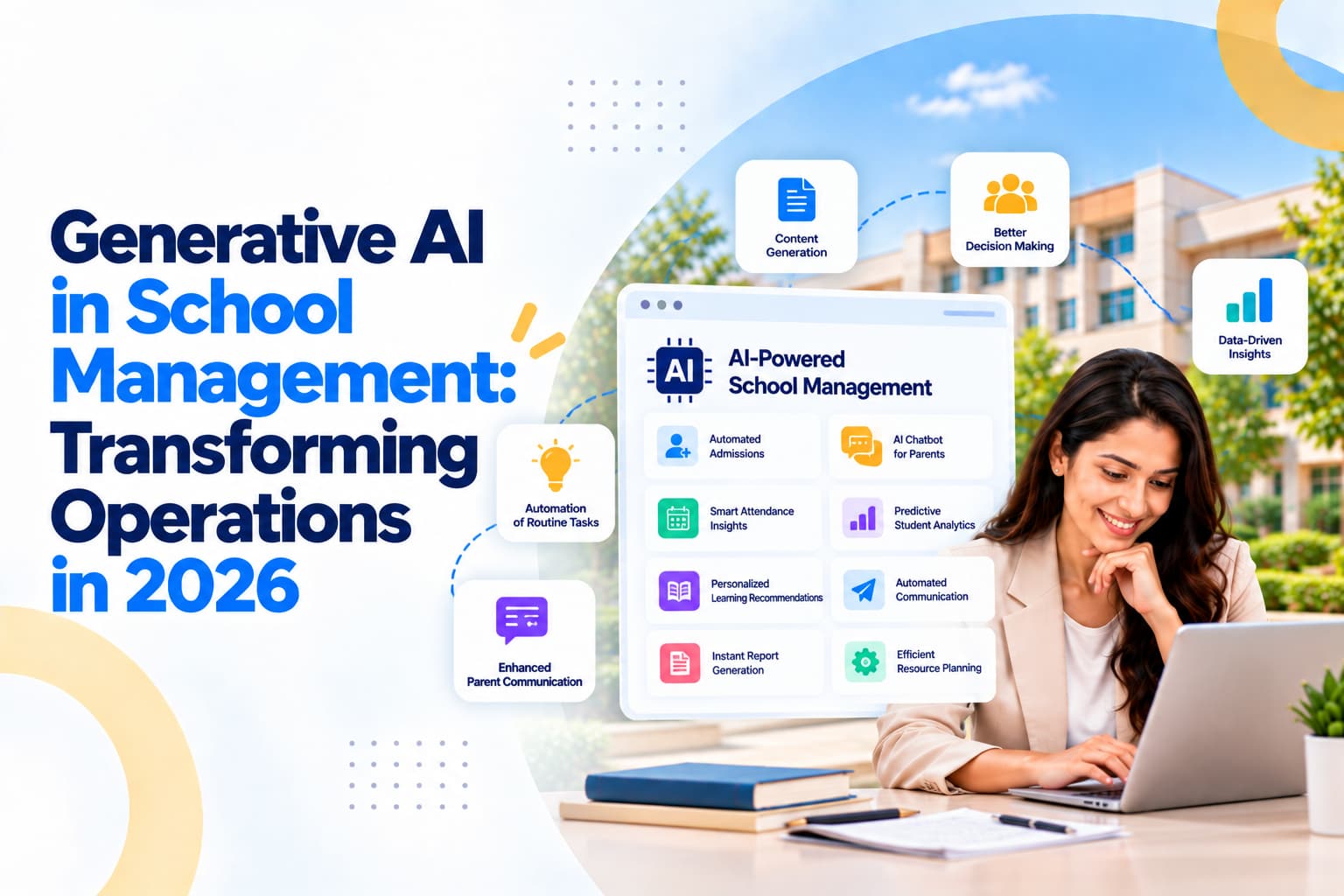 AI Technology
2026-09-29 8 min read
Discover how Generative AI is transforming school administration, communication, reporting, and everyday operations in 2026.